All Categories
Featured

Table of Contents
- – Choosing Top Virginia Solar Panel Installation ...
- – How The 25 kW Property Tax Exemption Cap Affec...
- – Identifying If Your Roof Offers 4.2–4.7 Peak S...
- – Using The Switch Together Program To Screen Vi...
- – How Do HOA Rules Affect Virginia Solar Panel I...
- – Is The 1,200 W Plug-in Solar Cap The Top Optio...
Choosing Top Virginia Solar Panel Installation Companies For Your Home
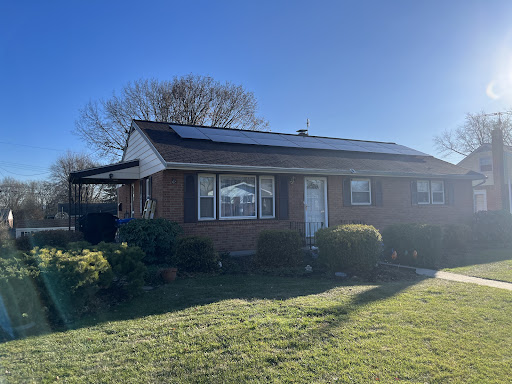
Switching to renewable energy requires you to traverse the intricate landscape of Virginia Solar Panel Installation Companies to ensure your home gets a high-quality, effective system. Because these installers handle every technical detail from structural integrity to electrical grid integration, choosing a partner with proven workmanship standards is essential for long-term performance. You should understand that a typical 13.99 kW residential system represents a significant investment, costing between $30,075 and $40,689 before applying any available incentives. By analyzing the mechanics of system sizing, financing models, and local regulatory protections, you can ascertain how to maximize your return on investment. This guide offers the foundational knowledge you need to assess professional qualifications and find the most dependable installers serving your area.
“We offer a variety of payment solutions, allowing you to choose the plan that best suits your financial landscape.” — Lumina Solar
How The 25 kW Property Tax Exemption Cap Affects Your Financial Plan
The 25 kW property tax exclusion cap is a primary monetary mechanism that ensures your home’s appraised value does not rise due to your solar setup. By protecting the extra value of the equipment from local tax assessments, this policy allows you to realize the full economic advantage of your energy production without an increased tax liability. When you examine Which Virginia companies specialize in solar panel installation, ask how they record this exemption to ensure your local taxing authority accurately excludes the system from your property valuation.
“The Solar Interconnection Grant Program, administered by the Virginia Department of Energy (Virginia Energy), is intended to help offset these costs, enabling public bodies to pursue solar projects that reduce energy expenditures and increase the deployment of clean energy across the Commonwealth.” — energy.virginia.gov
Beyond tax exemptions, your system generates value through multiple distinct channels that compensate for the initial investment. Understanding these mechanisms is essential for modeling your long-term return on investment:
- NEM: You get credits at the full retail rate for every kilowatt-hour of surplus energy sent back to the grid, effectively turning your meter backward.
- SRECs: These represent the environmental attributes of your electricity generation, which you can market as a secondary income source based on the total megawatt-hours your system generates.
- Federal tax considerations: You must consider the sunsetting of the federal residential clean energy tax credit, which is no longer valid to systems placed in service from January 1, 2026, onward.
Verify with your chosen solar firm that your system design remains under the 25 kW threshold to qualify for the full tax waiver status.
When evaluating Virginia Solar Panel Installation Companies, you must first determine your solar system size, which averages 13.99 kW in the state, to understand how your roof solar compatibility and local peak sun hours—typically 4.2 to 4.7 per day—influence your total solar installation cost. You should speak with a Solar Panel Installation to compare an accurate price quote, ensuring your chosen solar company holds a NABCEP certification to guarantee technical expertise while navigating complex HOA solar rules and potential participation in a Switch Together program. To optimize your financial return, analyze how grid credit program and RECs function alongside the state property tax exemption for systems up to 25 kW, while determining if a battery storage system, costing $10,000 to $13,000, or a UL-certified plug-and-play solar capped at 1,200 watts better suits your energy independence goals. By concentrating on the average price per watt of $2.53, you can better rationalize the total $30,075 to $40,689 investment, or the $18,000 to $22,000 range for smaller arrays, as you leverage available solar tax incentives to lower your long-term expenditure.
Identifying If Your Roof Offers 4.2–4.7 Peak Sun Hours Daily For Solar Panel Installation
A roof is suitable for solar setup when its physical characteristics allow it to collect the regional average of 4.2 to 4.7 peak sun hours per day effectively. Installers analyze these conditions to ensure that the energy production model accurately mirrors the physical realities of your home, as orientation, pitch, and shading dictate how much sunlight your system transforms into electricity.
When you evaluate potential projects, understanding How Virginia solar panel installation companies compare in their site analysis methods is essential. A professional evaluation usually includes examining several essential structural and environmental factors:
| Factor | Optimal Condition | Impact on Productivity |
|---|---|---|
| Orientation | South-facing | Increases direct exposure to sunlight. |
| Pitch | 30 to 45 degrees | Aligns panels with the sun's periodic path. |
| Shading | Zero obstruction | Prevents voltage drops caused by partial shade. |
| Roof Age | Less than 10 years | Prevents the necessity for premature system removal. |
Beyond these variables, installers utilize specialized software to model irradiance levels, accounting for seasonal tree growth and neighboring structures that might cast shadows during peak production windows. If your roof is nearing the end of its functional life, you should prioritize a roof replacement before scheduling an installation to avoid costly maintenance later. Verify the remaining lifespan of your roofing materials and inspect for any structural weaknesses that might require reinforcement to support the weight of a mounted array.
Using The Switch Together Program To Screen Virginia Solar Panel Installation Contractors
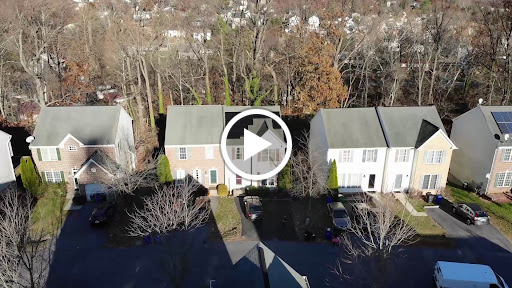
The reverse auction program is a regional group-buying initiative that leverages shared consumer demand to lower the cost of a solar fitting through a competitive reverse auction process. By collecting homeowners into a single buying group, the program invites qualified installers to compete for the project portfolio, which compels them to refine their pricing models beyond what you might receive in an individual solar estimate. This structure assists you recognize Which Virginia companies specialize in solar panel installation by filtering for those qualified for handling high-volume, standardized projects while maintaining the rigorous quality standards required by the initiative.
“Virginia also offers a solar property tax exemption, meaning you don't need to pay a higher property tax for adding solar panels to your house.” — energysage.com
When engaging in this program, you benefit from a streamlined procurement path that differs substantially from the traditional market method:
- Competitive Bidding: Installers provide their most competitive pricing to secure the group contract, often reducing the standard $2.53 per watt market average.
- Vetted Standards: Participating installers must satisfy pre-defined criteria, ensuring they possess the required expertise for local residential projects.
- Simplified Comparison: The program standardizes the scope of work, making it easier to evaluate competing offers based on equipment quality rather than confusing service inclusions.
- Volume Savings: Collective buying power allows for bulk material acquisition, which translates into lower overhead costs for your specific installation.
Examine the specific equipment brands and service warranties provided through the current cycle to verify they correspond with your home’s energy production requirements.
How Do HOA Rules Affect Virginia Solar Panel Installation Companies?
HOA rules impact Virginia Solar Panel Installation Companies by placing legal boundaries on the visual and structural requirements that home associations can impose on your project. Because state law prioritizes renewable energy access, homeowners associations cannot impose guidelines that create unreasonable obstacles to entry for residents seeking to mount solar equipment.
“The owner shall provide documentation prepared by an independent solar panel design specialist, who is certified by the North American Board of Certified Energy Practitioners and is licensed in Virginia, that is satisfactory to the association to show that the restriction is not reasonable according to the criteria established in this subsection.” — law.lis.virginia.gov
When you are researching Virginia solar panel installation companies worth hiring, confirm that your selected solar company comprehends the specific protective laws governing these common interest communities. These regulations serve to equilibrate community standards with your right to produce clean energy. Specifically, an association cannot forbid a solar installation unless their restrictions meet the following criteria:
- Cost Impact: Any requirement that raises the total project cost by more than 5% is legally unenforceable.
- Performance Impact: Any requirement that lowers the projected effectiveness or energy output of the system by more than 10% is prohibited.
- Safety and Compliance: Associations may still stipulate that installations comply with standard building codes and safety regulations.
Navigating these rules demands a clear understanding of how your system design might initiate an association review. The subsequent table summarizes the thresholds installers must maintain to ensure your project remains compliant with local governing documents:
| Restriction Type | Legal Threshold |
|---|---|
| Project Cost Increase | Maximum 5% over base quote |
| System Performance Loss | Maximum 10% reduction |
| Approval Authority | Restricted to reasonable artistic standards |
Review your association’s specific architectural guidelines before finalizing your solar estimate to identify any potential conflicts regarding panel placement or visibility.
Is The 1,200 W Plug-in Solar Cap The Top Option For Your House?
A 1,200 W plug-in solar cap is the highest power limit allowed for simplified, wall-outlet solar systems in Virginia as of July 1, 2026. Unlike a traditional rooftop array that requires a complex electrical interconnection managed by a professional, these plug-in solar systems are designed for instant, low-barrier energy generation. Because these units connect directly to your household circuit via a standard wall outlet, they function as a localized offset to your daily base-load power consumption rather than a comprehensive energy supply for the entire residence.
“Virginia's new plug-in solar law covers qualifying portable devices with a maximum output of 1200 watts.” — youtube.com
When you are in the midst of Finding a reliable solar panel installation company in Virginia, it is useful to grasp how these smaller systems vary from permanent installations:
| Feature | Plug-in Solar System | Standard Rooftop Installation |
|---|---|---|
| Capacity | Limited to 1,200 watts | Typically 13.99 kW average |
| Installation | User-managed via wall outlet | Requires professional electrical work |
| Safety | Must be UL certified | Standard electrical permitting |
The main mechanism ensuring safety for these systems is the requirement for UL certification, which mandates that the hardware automatically disconnects from the grid during power outages. This stops the unit from sending electricity into a downed line, a critical safety feature that utility employees rely upon during repairs. While these systems offer a lower entry point, they do not qualify for the same incentives or grid credit program benefits as larger, professionally wired arrays.
Confirm that your home’s electrical circuit can handle the specific wattage of your selected plug-in equipment before buying to avoid tripping breakers.

Table of Contents
- – Choosing Top Virginia Solar Panel Installation ...
- – How The 25 kW Property Tax Exemption Cap Affec...
- – Identifying If Your Roof Offers 4.2–4.7 Peak S...
- – Using The Switch Together Program To Screen Vi...
- – How Do HOA Rules Affect Virginia Solar Panel I...
- – Is The 1,200 W Plug-in Solar Cap The Top Optio...
Latest Posts
If You Desire A Reliable Builder For Your Delaware Solar Setup
Shunning Bad Operators Among Delaware Solar Panel Installation Companies
What Guidance Do Delaware Solar Panel Installation Companies Have For You?
More
Latest Posts
If You Desire A Reliable Builder For Your Delaware Solar Setup
Shunning Bad Operators Among Delaware Solar Panel Installation Companies
What Guidance Do Delaware Solar Panel Installation Companies Have For You?